Tuesday, July 10, 2007

Power of Art - Picasso


It strikes me that in the likes of Picasso through the development of his own art, we come through so muych 'disorientation' and wrestling in life, such as we find written and expressed in the psalms. I was intrigued by the ways in which he almost shunned anything political and yet in time came to gather up so much of his own 'nightmare scenes' with that of the world stage of the time. The way he expressed this was shown in several ways, but Schama uses Guernica, after the little town bombed and devastated. The painting below is the result. (from his surrealist period)

Schama states,
"This is the reason why the painting has such an impact. Instead of a laboured literal commentary on German warplanes, Basque civilians and incendiary bombs, Picasso connects with our worst nightmares. He's saying here's where the world's horror comes from; the dark pit of our psyche."
This picture remains a powerful political artwork against such attrocities, it is a visual 'lament' really that lingers and echoes on into our day.
Reflecting on Picasso's image alongside Lamentations 3 speaks powerfully...
I'm the man who has seen trouble, trouble coming from the lash of God's anger. 2 He took me by the hand and walked me into pitch-black darkness. 3 Yes, he's given me the back of his hand over and over and over again. 4 He turned me into a scarecrow of skin and bones, then broke the bones. 5 He hemmed me in, ganged up on me, poured on the trouble and hard times. 6 He locked me up in deep darkness, like a corpse nailed inside a coffin. 7 He shuts me in so I'll never get out, manacles my hands, shackles my feet. 8 Even when I cry out and plead for help, he locks up my prayers and throws away the key. 9 He sets up blockades with quarried limestone. He's got me cornered. 10 He's a prowling bear tracking me down, a lion in hiding ready to pounce. 11 He knocked me from the path and ripped me to pieces. When he finished, there was nothing left of me. 12 He took out his bow and arrows and used me for target practice. 13 He shot me in the stomach with arrows from his quiver. 14 Everyone took me for a joke, made me the butt of their mocking ballads. 15 He forced rotten, stinking food down my throat, bloated me with vile drinks. 16 He ground my face into the gravel. He pounded me into the mud. 17 I gave up on life altogether. I've forgotten what the good life is like. 18 I said to myself, "This is it. I'm finished. God is a lost cause." It's a Good Thing to Hope for Help from God 19 I'll never forget the trouble, the utter lostness, the taste of ashes, the poison I've swallowed. 20 I remember it all - oh, how well I remember - the feeling of hitting the bottom.
21 But there's one other thing I remember, and remembering, I keep a grip on hope: 22 God's loyal love couldn't have run out, his merciful love couldn't have dried up. 23 They're created new every morning. How great your faithfulness! 24 I'm sticking with God (I say it over and over). He's all I've got left. 25 God proves to be good to the man who passionately waits, to the woman who diligently seeks. 26 It's a good thing to quietly hope, quietly hope for help from God. 27 It's a good thing when you're young to stick it out through the hard times. 28 When life is heavy and hard to take, go off by yourself. Enter the silence. 29 Bow in prayer. Don't ask questions: Wait for hope to appear. 30 Don't run from trouble. Take it full-face. The "worst" is never the worst. 31 Why? Because the Master won't ever walk out and fail to return. 32 If he works severely, he also works tenderly. His stockpiles of loyal love are immense. 33 He takes no pleasure in making life hard, in throwing roadblocks in the way: 34 Stomping down hard on luckless prisoners, 35 Refusing justice to victims in the court of High God, 36 Tampering with evidence - the Master does not approve of such things. God Speaks Both Good Things and Hard Things into Being

Thursday, June 21, 2007

Power of Art - Van Gogh


Week 3- and it was Van Gogh. The story of his life is powerful and tragic. Indeed, his own life a wrestling of faith, evangleism and the descent into the raw fabric of life among those 'outcast' and in the gutter. He may have been no preacher, but through the torment of the life communicated in his art there is meaning conveyed. I am no art critic, but I stand amazed and in awe at the shift from the darkness of the potato eaters to the transformed and brilliantly colourful world of his later works.

See here the Wheatfield with Crows(1890)
Schama says, "His art would reclaim what had once belonged to religion - consolation for our mortality through the relish of the gift of life. It wasn't the art crowd he was after; he wanted was to open the eyes and the hearts of everyone who saw his paintings. I feel he got what he wanted. So what are we looking at with this painting? There’s suffocation, but elation too. The crows might be coming at us, but equally they might be flying away, demons gone as we immerse ourselves in the power of nature. It's a massive wall of writhing brilliant paint, in which the colour itself seems to tremble and pulse and sway."
What intrigues me is wha must have been going on in his head. The tensions of the grind and brokenness of his life and that of others he had immersed himself in and yet this wonderful artistic genius that had him paint a painting a day at one stage, the rapid energy that poured out of him and generated such artworks and yet drained him of his very life too.
Recently we reflected upon Psalm 8 at the Caim readings. As I look at van Gogh's art here it comes to mind:
PSALM 8
1 God, brilliant Lord, yours is a household name. 2 Nursing infants gurgle choruses about you; toddlers shout the songs That drown out enemy talk, and silence atheist babble.
3 I look up at your macro-skies, dark and enormous, your handmade sky-jewelry, Moon and stars mounted in their settings. 4 Then I look at my micro-self and wonder, Why do you bother with us? Why take a second look our way? 5 Yet we've so narrowly missed being gods, bright with Eden's dawn light. 6 You put us in charge of your handcrafted world, repeated to us your Genesis-charge, 7 Made us lords of sheep and cattle, even animals out in the wild, 8 Birds flying and fish swimming, whales singing in the ocean deeps. 9 God, brilliant Lord, your name echoes around the world.

Friday, June 15, 2007

Power of Art - Rembrandt

Week 2 of Simon Scama's Power of art explored Rembrandt van Rijn (1606 - 1669)

A man of humble birth who came to know the good life basically. Sounds like he and his rich wife could 'shop to you drop'. Amazing portraits and yet after the death of hsi wife his paitings begin to change from the very finished dutch style to a rougher 'incompleteness' is suggested, but et how powerful. He also seems to have been an artist who knew what the people wanted and could provide it in his art. The painting Schama focussed upon was one destoned for the City Chambers of Amsterdam

Schama says,

"Claudius Civilis is a painting drunk on its own wildness. It is a painting that would not just be the ruin of Rembrandt's comeback, but also the ruin of his greatest vision. Or so I think, for I can't be sure. None of us can, because we don't know what the big picture looked like. What we're looking at here is a fragment, a fifth of the original size, the bit rescued from Rembrandt's knife. This may just be the most heartbreaking fragment in the entire history of painting. The painting was commissioned as a stirring depiction of the legendary story of how the Dutch nation came to be born. What they got was Rembrandt's version of history: ugliness, deformity, barbarism; a bunch of cackling louts, onion chewers and bloody-minded rebels. The paint slashed and stabbed, caked on like the make up of warriors. Despite making him bankrupt he's saying: these are your flesh and blood, rough and honest, your barbarian ancestry. They made you Dutch."

A brave thing really - yet how powerful this art was and is.

The Return of the Prodigal is of course a favourite, made more so by Henri Nouwen's book on the painting.

"Often I have asked friends to give me their first impression of Rembrandt's Prodigal Son. Inevitably, they point to the wise old man who forgives his son: the benevolent patriarch.
"The longer I look at 'the patriarch', the clearer it becomes to me that Rembrandt has done something quite different from letting God pose as the wise old head of a family. It all began with the hands. The two are quite different. The father's left hand touching the son's shoulder is strong and muscular. The fingers are spread out and cover a large part of the prodigal son's shoulder and back. I can see a certain pressure, especially in the thumb. That hand seems not only to touch, but, with its strength, also to hold. Even though there is a gentleness in the way the father's left hand touches his son, it is not without a firm grip."
(excerpt)

However, from the programme I was introduced briefly to his painting of Simeon. Here is the old man almost overwhelmed and his hands holding Jesus yet almost prayerful at the same time. A reverence.


Power of Art- Caravaggio


Here in NZ a new series by Simon Schama on the 'Power of Art' is now running Sunday nights.
I want to use tis for my own reflection as one who enjoys art.
Week one was on Caravaggio (1571-1610)
Schama is a narrator to the life and paintings of Caravaggio that invites you into the paintings of a man who was deeply disturbed and troubled in himself. In many ways painting became a means of confession and a reckoning. Schama gives focus to his painting of David with the head of Goliath. Notably, Goliath is painted in the image of Caravaggio.

Schama says,

"In this painting of the victory of virtue over evil it's supposed to be David who is the centre of attention, but have you ever seen a less jubilant victory?
On his sword is inscribed "Humilitus Occideit Superbium", that is, humility conquers pride. This is the battle that has been fought out inside Caravaggio's head between the two sides of the painter that are portrayed here.

For me the power of Caravaggio's art is the power of truth, not least about ourselves. If we are ever to hope for redemption we have to begin with the recognition that in all of us the Goliath competes with the David."


Schama also points out the ways in which Caravaggio paints the fleshly humanity he knows, the earthy-ness of humanity he portrays in so many religious artwork he paints.

For me I have always appreciated his Supper at Emmaus. But there are 2 versions: on in London (1601) the other in Milan (1606).
In the first (London) the image is full of rich, victorious splendour. The light throughout the paiting, the shadows created help our eyes 'read' the painting. Jesus is portrayed without a beard which is quite unusual. His hand gesture appears soft and gentlein blessing. Indeed it almost reaches out to us.There is also a full table of food before them . The intensity of the emotions of Christ's disciples is conveyed by their gestures and expression at this moment in time (of recognition) when Jesus is blessing their meal. We are made to feel a participant in the event from the perspective we are permitted at the table. The painting in so inviting us asks us to consider what the resurrection of Christ means for us.

Some 5 years later though and the image has changed. Is there a shift in Caravaggio’s understanding of the resurrection of Jesus? The arrangement of the figures tells the story. No more the victorious Christ, nor the energy of the disciples recognition of who this 'stranger' is. In contrast, the arrangement of the figures in the Milan Emmaus makes us aware that people need time to recognise the reality of Jesus at this table and so the resurrection. The light here is more subtle and subdued, indeed here is an older, bearded Jesus blessing the meal and a different pace of recognition conveyed. Here the disciples hand rests near Jesus' hand, no large gestures. I sense here a quiter and gentler invitation to come share at this table at a meal that is far simpler too.


Wednesday, June 06, 2007

Globe lessons


I managed into a public lecture today given by Patrick Spottiswoode (director of Globe Education). His topic was concerned with Shakespeare's Globe and how the space/ shape influences performance and the actor -audience relationship. I confess I haven't seen it, but it is a space that has intrigued me for a number of years since church planting and being concerned about space and worship and congregational matters.

The theatre we were in was typically for a large lecture. He described it as a 'confrontational space in which we awaited knowledge to be imparted and given to us. It is a typical space and familiar in most buildings, but he turned it on its head and spoke of how the theatre Shakespeare knew at the Globe was more a place for seminar, where ideas were thrown out for the audience to consider. The round-ish (20 sided building) offered more of a 'hug' and an intimacy in ;'gathering round'.. as he said 'we do not gather square!' Here then you see the audience and talk to them as part of the drama on stage. It also has significant open air light. Today he somewhat lamented the modern theatre and its turning off lights. He caricatured this to going to be as a child and turning the lights out to go to sleep, or to quietening a parrot that is noisey, you cover it with a blanket. In a fashion this is what we have done to audiences. At the Globe, actors and audience share the same light, there is an interface that allows for opportunities of 'improvised' engagement in ways that bring the text to life. Indeed, he spoke of the energy that occurs between the two and how thre actors in turn are energised as the audience is engaged in the drama. It is a two-way interaction.He further shared how we often speak of 'going to SEE' a movie, a play eyc. In Shakespeare's Globe you paid to see, but most of all the HEARING places as the language and metre of the drama play around with the words/sounds.

He also made comment on the historical context. Theatre and actors were of low social status on the margins of society. They were margineli those small extra notes in the margins of some books which added some commentarytot the central text. However, he suggested that rather than such a simple reading it was more that the city was worried about the theatre as graffitti. Theatre was no wholly respectable and its commentary was forced to the marghins/suburbs among the brothels.

This is a brief summary of what was a very entertaining and engaging lecture. It was in itself 'rough theatre' and he is a very gifted communicator. Plenty food for thought.

Monday, May 28, 2007

Pentecost - No ordinary Time

Pentecost by Solomon Raj, India.


It was a very windy day here in Dunedin. Boy was it blowing - perfect for Pentecost Sunday!

The scene was set well before anyone turned up. Papers flew around and people arrived windswept.

We had large kites from each corner and a calling of one another to worship as we gathered and brought them to the front. We had a bunch of colourful balloons in each was a slip of paper which would tell us what we would do next in the service - a sense of unknown, of anticipation. The wind rattled the roof.


I got people who wished to come pop a balloon. It was great fun and soon people got into it and I didn't have to even ask. We had a dramatic reading of Acts story, prayers, songs... everyone had a kite in their seat .


In immersing ourselves in the text of Acts 2 we really thought aorund Peter's sermon and his picking up of Joel 2. All sounds so strange,


Then afterward I will pour out my spirit on all flesh; your sons and your
daughters shall prophesy, your old men shall dream dreams, and your young men
shall see visions. 29 Even on the male and female slaves, in those days, I
will pour out my spirit. 30 I will show portents in the heavens and on the
earth, blood and fire and columns of smoke. 31 The sun shall be turned to
darkness, and the moon to blood, before the great and terrible day of the Lord
comes. 32 Then everyone who calls on the name of the Lord shall be saved;
for in Mount Zion and in Jerusalem there shall be those who escape, as the Lord
has said, and among the survivors shall be those whom the Lord calls.


JOEL 2


We considered the strangeness and how on that day people attempted to explain away the event of the Spirit. How do we explain so much away?

In the face of this and a world of fears, anxieties and greeds what are we called to be as God's people? We are to fly some kites - prophesy, dreams and visions - testify to the strrange workings of God in the world and life. A people of freedoms, liberated by the Spirit, Loving practices which drive out fears, hopefilled in pointing people to a new reality at work in the midst of everything they see as so settled and explainable, how does or life as individuals and communally give witness to all this?


We are going to fly some kites in our day and our place!

Come Holy Spirit, Come!


Friday, April 06, 2007

Holy Week


This week we have used this as our main image for our House of Sorrows. You can see some of the things we did in worship there in the link.
Pete Wheeler, A Dunedin artist gave us some of his artwork based on Unotuchables in India. We had a wonderful balance of Gospel, Lamentations readings and following the thread of sorrow through these to prayerfully pray for the cities we know, the troubles places and peoples of the world.
We await Sunday with a whole new outlook of anticipation.

Saturday, March 31, 2007

Rejection


As we enter Holy Week we come to a climatic point in Jesus journey - entry into the city of Jerusalem.
I have often wondered about several aspects of this event and never truly made sense of them. Jesus has been readying himself for this day and the events that follow: Luke 9 v51-56 tells us he set his face for Jerusalem and preparations were to be made for his arrival. They refused him in the Samaritan village and the disciples ask if he wants fore to come upon the village.
So he comes to Jerusalem and awaits the 'celebrity' status welcome from the city. It is Jesus signaling that he is royalty - well documented throughout Luke's account. The preparations and the procession on the colt, set apart, the cloaks thrown down and absence of city officials and priests etc reveal the hardened spiritual condition of the city. This insult and rejection for the visitation - 'blessed is he who comes in the name of the Lord!' as God's agent makes for even greater impact. As a result, Jesus pronounces judgement and weeps that they did not recognise the divine visitation in him.
I wonder how my city, your city, town, village may or may not receive Christ still? In what ways are there still insults, rejections to the extent that the very stones are cryng out instead, in place of those of us who should watch and pray? How has the church lost sight of the Kingly visit?

Saturday, March 24, 2007

Yield - Psalm 32


Last Sunday we explored Psalm 32. We began by considering whatthings we woiuld placve in our pursuit of happiness sack? On the surface it is easy to look ‘perfect’ and ‘happy’, but the Psalm today and Scripture at large remind us that what often fills our happiness sack are some things that deep down become such cravings that in actual fact they drive us, they cut us off from life. Lamentations 1 speaks of how God was 'woven my sins into a rope and harnessed me to captivities yoke' . We cling to our sack and forget God.
In Psalm 32 we are given an inside glimpse to someone’s inner life, to the bits that make them tick as person, v3-7 allow us to look inside the psalmists life – and there we discover a life that has been full of denials as to the real ‘life condition’, listen again, ‘when I kept it all bottled up inside, my bones turned to powder, my words groans all day long, the pressure never let up, all the juices of my life dried up.’
The word the Bible applies to such a life alienated form the source of Life who is God is SIN. He informs us then of the traumatic experience of unconfessed sin, due to stubborn silence, there were torments, like Lady Macbeth he suffered the guilt and agonies. Our culture has lost an awareness of sin and guilt. Our use of the word and the ways we label things ‘sinful’ have changed considerably.
The Bible is clear though in recognizing that human existence knows the experience of being cut off from life. For a long time, this experience of alienation from the source of life is summed up as sin. According to 1 John 1 v8 to claim that we have no sin is a great self-deception. So we look beneath the surface of his life and we see somewhat mirrored , if we are honest, we all fall far short. The point however is that the psalmist places this in the context of a God who is moved beyond such silence as the denial of sin in me. The psalm begins with acknowledging the ‘happiness’ the integrity, the honesty of those who make confession, they are the ones who are recipient of God’s benevolent action of forgiveness. – ‘Whose rebellion has been borne (by God)’ and ‘whose sin has been covered up (by God)’. Genuine ‘happiness’ is something God gives with God’s initiative, nothing earned, worked for but GRACE. The words used - ‘To carry’, ‘to cover’, ‘to impute’ emphasise the extent of God’s forgiveness; additionally, to avoid reducing human ‘sin or wrongdoing to clichĂ©, 3 words for wrongdoing and deeds are used: each an aspect of sin; pasa = political term means to rebel; hatta = to miss the target; cawon = crooked act, also entails a persons conscience and so a sense of ‘guilt’.
But v5 is the turning point, the repentant turning in confession to the Lord. Indeed, it repeats the 3 common words from v1,2 for sin. And so the ‘pressure’ is lifted, guilt dissolved, sin disappeared. We suffer a demise of confession in our reformed tradition today, we have culturally assimilated and dismissed notions of sin. In liturgy perhaps especially, indeed the protestant form of confession is GOSSIP whereby we confess and point out our neighbours sin instead of our own. However you want to label it, if we stick with the biblical word sin for whatever the crime or pathology in todays terms. Robert Jenson refers to confession of sin being as necessary as taking out the rubbish/garbage.
‘Sin is like garbage. You don’t want to let it build up. Confessing sin is like taking out the garbage. You want to do that regularly because taking out the garbage is an extremely healthy thing to do.’ The psalmist urges and invites people to ‘yield’ repent, turn around to God, confession of sin, the practice of penitence before it is too late. The climax in v7 concludes that we can find shelter in the Lord. “You are my hiding place’, a place of refuge in the distress and threat of life and encircles him with shouts of deliverance at the celebration, all in sharp contrast to the immobilizing distress of v3,4. Finally, v8,9 provide further instruction. The image exhorts the psalmist and others not to be like the horse or stubborn mule that needs a bridle because they lack understanding’. Those who do not and persist in alienation will always find trouble and discontentment, in contrast to those who trust will be sheltered, covered, live under God’s hesed, covenant loyalty. Psalm 32 functions as a psalm that directs us in a new direction in/to life when we yield, confess our sin and trust in (see v1,2) He concludes with a resounding call to praise and celebrate God with honest, open hearts. We concluded with a time of COnfession inviting people to symbolically wash their hands in a bowl beneath the cross as a Taize Chant was played. It was confession as a people of God and as individuals.

Saturday, February 17, 2007

Lenten Project


We aim to use Lamentations as the basis for creating a -
"House of Sorrows" at our Roslyn Church as we journey through Lent we are looking to use this website to make some posts, but also have some interactive response that allows us to create this House of Sorrows for this season. We want people to feed in prayers, stories that show us something of the 'lament' in our present world. Ideally, we'd like to hear from places where the voice heard is more first hand.We would also like it if you could post to us a small piece of cloth/rag that we may set your poem/story beside and place in the House of Sorrows which we hope will become an installation that can give voice to lament and be a place for offering prayers of Hope. ( we can give you the address)
for more go to our Lament Blog:http://lament.highgatemission.info/index.html

Friday, December 29, 2006

Christmas Day


Christmas Day came with 'Surprises' out of boxes all wrapped up. Children had great fun and adults as we ripped them open and we sang or prayed or read the story. It gathered up all our advent journey as you can see here.
Amazingly, though I didn't realise it at the time, the sun was shining right on the manger!
So we got excited at the surprises we opened, the surprises of the story... shepherds turned up... and Mary pondered these things in her heart. So we took some time to ponder too.
A church full and a wonderful part of our day!

Saturday, December 23, 2006

As it is in Heaven

For some time now we have wanted to catch this movie. Finally managed it last night. Our little local cinema The Metro is great for good qusality little films. I rarely see Hollywood these days.


The story is simple. It doesn't have glamourous cast, nor glitz, no complex twists and turns. Rather it has evertything of the everyday, the complexities are in the individuals and their daily lives. It shows the scenic remoteness of the village in Norrland, northern Sweden. You can check out a synopisis elsewhere, but the main character is complex and 'strange' really, but his is a search like all the others amidst a social-cultural context where each is bound up and gagged in a range of ways. Also the past that binds them too. You can at times feel the intensity of it. perhaps that's because it is all too real. The closedness of the small village, the church, the choir. The minister is an interesting and inwardly eaten up guy just like the rest and tortured by his understanding of faith. There are some good lines too as liberation comes for each one of them, though not without pain.

Daniel (Michael Nyqvist), a successful and talented conductor, who returns the rural village he grew up in, to recover from a heart attack. No one recognizes him because he had changed his name many years ago. Soon, he is approached to lead the local church choir. As he confronts his own past demons, love comes in the form of one of the choir members, Lena (Frida Hallgren), who helps him to find who he really is. His return though sees him alone in the midst of winter in the village. As he encounters people, he is asked to come lead the choir. He refuses, but is often heard say 'I am here to listen'. I think there is something profound in those words when we go anywahere new and meet new people.

It is its simple story about the beauty of life that makes this film a gem. The music isn't bad either and the scenery all come together and engage your emotions.

I can only agree further with the following comments:
Another thing the audience may have problems with is the simple
characterizations in the film. Everyone has a straightforward role – the
teacher, the artist, the priest, the abuser, the abused, the messiah, the bully;
everything appears so clear-cut and one-dimensional. But, there is so much
honesty in them that their petty differences seem to be a stark reflection of
our own lives.
To top it all off, the film features some truly moving scenes
which will leave you mesmerized with the beauty of music and on a deeper level,
life. Other than the obligatory final inspiring scene, another gorgeous sequence
to look out for is when the abused wife, Gabriella (Helen Sjöholm), sings a song
specially written for her. One of Sweden’s biggest musical stars on stage,
Sjöholm’s voice will enchant the cynic in you.
Sure, there are no loud
explosions and no fancy computer generated effects to draw in the average
movie-goer. But do yourself a favour, watch this film, experience the beauty of
life, and you will take home a piece of heaven with you.

Friday, December 22, 2006

Planting and tending lessons

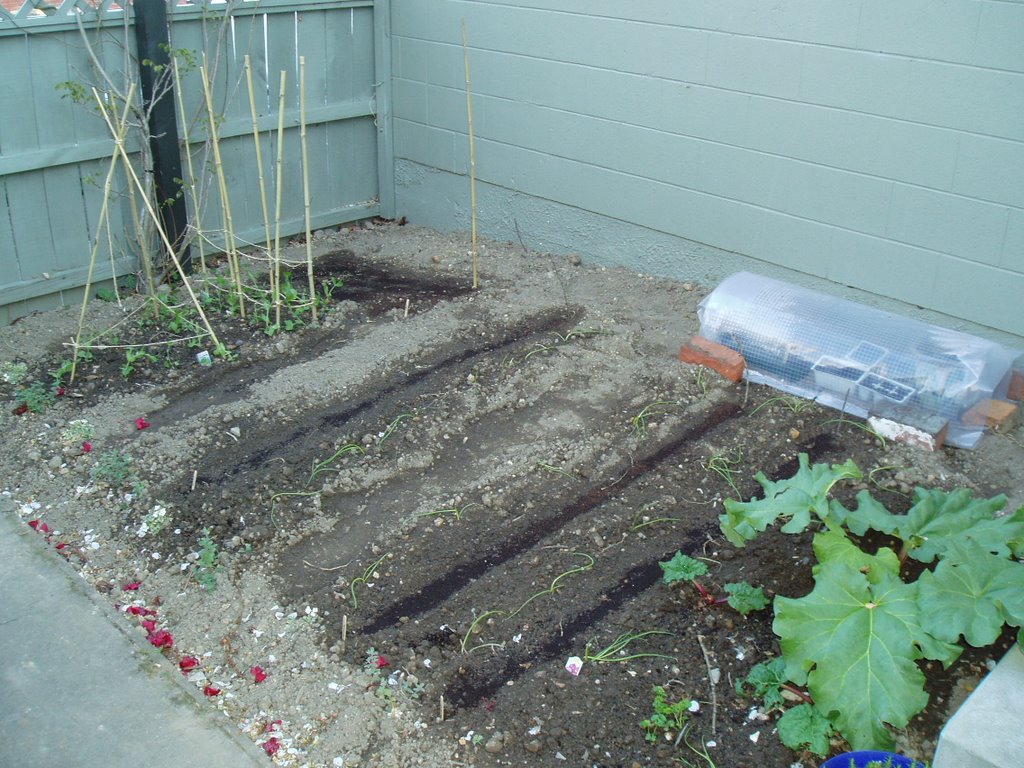
At our mid-week Caim this Spring (NZ time) we set about a garden ministry. Each Saturday morning we took on a garden and dug veggie plots, went back and planted seeds or seedlings, or simple weeding and tidy up.

Closer to home, I decided this year to plant some veggies too. It started something looking like this -

sugar snap peas, sweet corn(!), lettuce, Rocket, beetroot, broccoli, red onions, carrots, parsnip, and butternut squash.
a venerable harvest to share around with friends and neighbours.


In a time of huge ministry change for us all at Highgate, but also myself, the little garden plot has served to remind me of Peterson's 'Under the Unpredictable plant' where he uses a gardening image for ministry.

I confess it has helped me through the past months and weeks since Martin just left a few weeks ago. tending these plants, just enough shelter too as it has even hailed recently, delicately taking out the weeds and watering as required... all the gentle reverence for pastoral care.


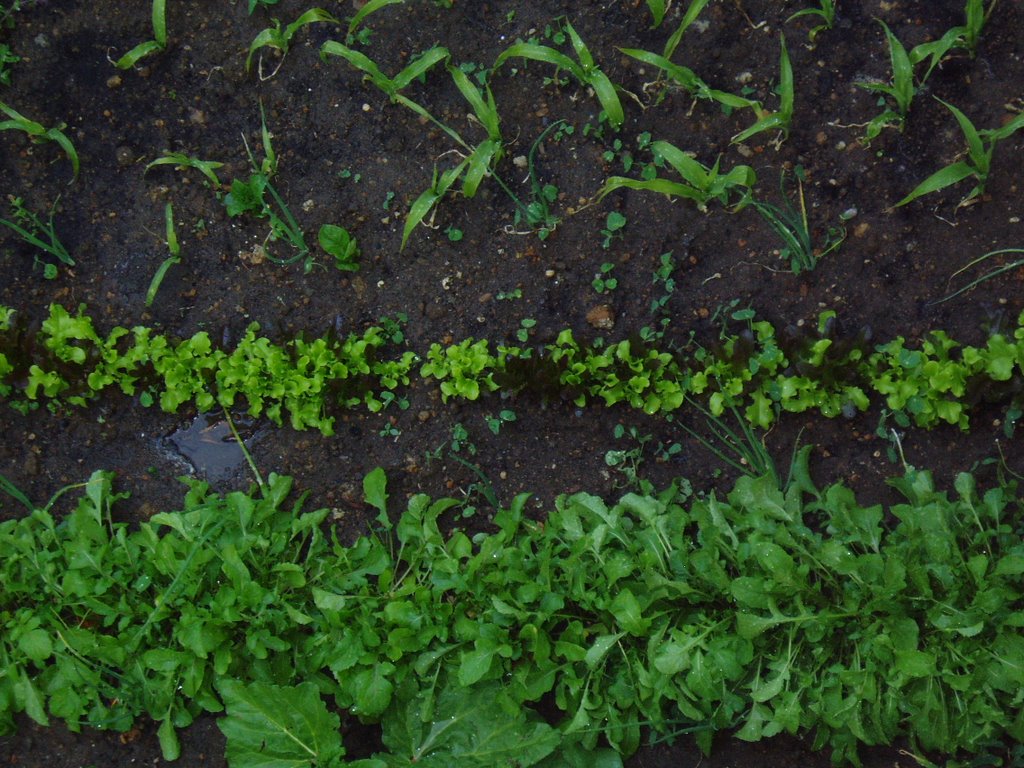
So here is a recent update on my patch. See how they grow. It was hard holding back at that crucial stage of simply placing the seeds in the soil. Waiting and waiting and waiting.

With some thinning out some should grow even more, but I hope to harvest some lettuce and rocket for making a fresh salad with plenty taste. Yum!

Thursday, October 05, 2006

Reading the Everyday


Having been reading and thinking and attempting, as last post, to find ways to get us to consider our 'embeddeness' in our locations in mission, I'm grateful to Paul Fromont for this via Maggi Dawn. Its an article in Thirdway Magazine from John Davies. (Though its much more too from his blog here.)

Monday, September 18, 2006

This familiar place?


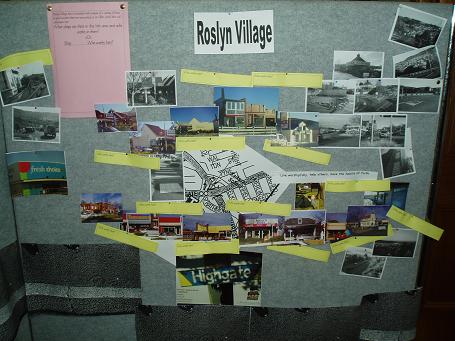
I came across a way of reading the local context which I adapted for our Annual Meeting purposes.

It is both a visual on the streets around us, buildings, as well as simnply noting which sde of the street people mainly walk on and why? to use of parks and are the seats comfortable, etc, etc. and there's a challenege to name the people who work in the cafes and shops along Highgate. A small challenge really.

Actually what I would love to do, and may yet again, is to get people to walk Highgate with an eye and sense of people movements and much more. It moves us beyond just looking to sensing. I liked that. Then we would display findings and discuss it in considering how we are embedded in this context and what locally could be improved in our environment, etc.

This is the bear bones of a method derived from the RSVP Cycles (Halpern and Halpern) Sadly, I cannot get my hands on a copy of this and so gleaned from the beb, but if anyone, knows anyone I could borrow from then it would be great to read that book.


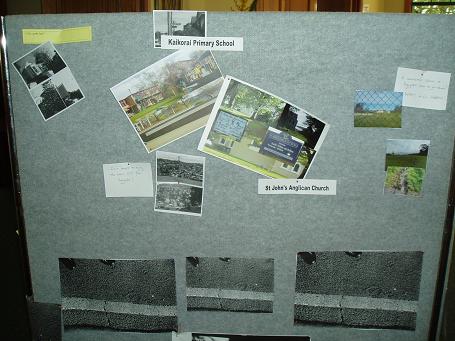
Interestingly, people using our facilitires and in the congregation have had curious interest too in the display in the main foyer area. Pre-school Music parents/grandparents and others. Mmmm!


I had loads of photos and comments and some fun bits for kids to find MArtin and/or me lying on benches hidden around the display. Also some fun photos from our youth along the way too. Also tried to note some changes to properties and in shop use etc. Lots of options to it really.


Friday, September 15, 2006

Moving through the silence


And so the blossom has started to burst in Dunedin! Took this today of the tree beside our house.

There is a great deal of change on Highgate just now and we're all in a spin as Martin is heading to Christchurch to a church there.

We have some big questions ahead in the next few months, but we need some thoughtful talk and dare I say it - silence - that helps us. I am reminded of this from Paul Fromont 'Benedict on Silence' which I have been pondering recently. (or from Anthony Hanson here)Given below.

"Silence is a cornerstone of Benedictine life and spiritual development, but the goal of monastic silence is not nontalking. The goal of monastic silence, and monastic speech, is respect for others, a sense of place, a spirit of peace. The rule does not call for absolute silence; it calls for thoughtful talk.... Silence for its own selfish, insulating sake, silence that is passive-aggressive, silence that is insensitive to the present needs of the other is not Benedictine silence.
Benedictine spirituality forms us to listen always for the voice of God. When my own noise is what drowns that word out, the spiritual life becomes a sham. Benedictine spirituality forms us to know our place in the world. When we refuse to give place to others, when we consume all the space of our worlds with our own sounds and our own truths and our own wisdom and our own ideas, there is no room for anyone else's ideas. When a person debates contentiously with anyone, let alone with the teachers and guides of their life, the ego becomes a majority of one and there is no one left from whom to learn. But Benedictine spirituality is a builder of human community. When talk is unrestrained, when gossip becomes the food of the soul, then destruction of others can't be far behind. When talk is loud and boisterous, when we make light of everything, when nothing is spared the raillery of a joke, the seriousness of all of life is at stake and our spirits wither from a lack of beauty and substance. Make no doubt about it, the ability to listen to another, to sit silently in the presence of God, to give sober heed, and to ponder is the nucleus of Benedictine spirituality. It may, in fact, be what is most missing in a century saturated with information but short on Gospel reflection. The Word we seek is speaking in the silence within us. Blocking it out with the static of nonsense day in and day out, relinquishing the spirit of silence, numbs the Benedictine heart in a noise-polluted world."

Joan Chittister, O.S.B., from her book (a translation/paraphrase of the Rule of St. Benedict, with her commentary) The Rule of Benedict: Insight for the Ages.

Friday, August 18, 2006

Readings 3

Spirituality in the City
Andrew walker (Editor) (SPCK 2005)


In this as so many areas, the education of the spirit is inseparably bound to highly practical challenges. If - as St Frances de Sales is supposed to have said - spiritual direction begins when people are helped to walk more slowly, talk more slowly and eat more slowly, then the life of the spirit in the city will entail asking about the size of rooms in public buildings, the flow of traffic on the streets, the levels of atmospheric pollution, the maintenance of parks, galleries and libraries, the space available for children in public - and countless other matters where decisions are regularly taken as though none of these could possibly be an issue. (Rowan Williams in Spirituality in the city, p24)

In recent times studies on space and place have seen an integration of the discussion of cities which usually focuses on planning, architecture, and economics, to incorporate the need to address the philosophical, theological, and spiritual aspects of cities. Albeit that this set of essays reflects much upon cities in Britain, this is still a very interesting little volume to read and reflect upon the every expanding city-scapes in New Zealand and the implications for faith. This book was specially commissioned by the London Centre for Spirituality and invites nine writers to help engage us with the nature of ‘spirituality’ and the urban environment of the city.
Each essay provides a different facet to spirituality in the city and offer more than a ‘sentimental’ celebration of the city. Rather, these essays are a serious attempt to understand ‘urban spirituality’ and a politic, if you like, of the built environment where insights of the work of God are discerned or made visible. So Mark Oakley writes of ‘Reclaiming Faith’ exploring the ‘intimations of the sacred –rumours of God’ (7,8) that shape faith in the city. Hence, each notes in their own way the ways in which ‘Urban life,… is at once dangerous and creative…’(R. Williams,17).
I especially appreciated essays from:
Rowan Williams, ‘Urbanisation, the Christian Church and the human Project’. Williams seeks to offer a ‘rough sketch’ of the themes and concerns that might inform an ‘urban spirituality’ with the role of the church needing some careful thought. Reflect upon the challenges he notes the use and organization of time, the question of ‘character’, life lived under the ‘sign of anonymous exchange’.
He tells us that:
We need to rescue spirituality from some of the ways in which it has been domesticated,. …. It becomes only a code for techniques of making people feel a bit better about themselves… where the Spirit makes people ‘uncomfortable about themselves and their environment, critical and creative, open to things being different. (24)
Williams wants a Church to know it has something distinct from the surrounding culture and yet has something distinct to offer society that is more humanizing.

Philip Sheldrake, ‘Cities and Human Community’; considering a theology of place, in particular aiming to hold together urbs (the physical place, buildings, etc) and civitas (people and their life together). HE offers a ‘perspective’ that considers the crisis of place engaging with writers such as Augustine, Sennet, and AugĂ©. In regard to De Certeau he takes up the practice of the city and ‘resistance’ to systems that leave no room for otherness. In conclusion he notes some spiritual issues especially the city as a place of reconciliation.

Bernadette Flanagan, ‘Urban Spirituality, One size does not fit all’, provides an excellent overview of six models of contextual spirituality, based upon Stephen Bevans snapshots of the ways Christians go about exploring the presence of God in different contexts they find themselves in. Flanagan provides helpful insights to each model with examples. This is a very concise, yet provocative essay with wide theological and social awareness beyond ‘new ways of being church’.

Andrew Davey, ‘The Spirituality of everyday life’. HE asks what is so different about prayer/spirituality in the city? How does the urban context affect the way we pray; and vice versa? What strategies and practices might we adopt?
Davey notes ways in which our ‘Location is vital. The places where we live, work, worship and encounter others are an essential part of the formation of our spirituality and theology.’(106)While the context(s) may not be very conducive to spirituality he does admit that ‘Cities are places of possibility and encounter’ (108) in which congregations can create spaces.

Andrew Walker, ‘Urban Possibilities for daydreaming’. Seeks to take the prayer of Examen and explore the dynamics of this as a suitable and apt form of prayer to the demands and pressures of urban life. This essay is well worth consideration as it is easily applicable to adapt to any urban context and its challenge for reading the cityscape environment, but in relationship to God.
There are some repeated themes throughout and some essays will strike you more than others. While each writer is aware of the dangerous, more negative side of the city, on the whole each is hopeful of the city. I wonder about the marginal voices and what they might say about spirituality in the city and whether they might take us to other depths not greatly expressed in this work. Furthermore, this volume may have benefited from an attempt to draw out the common themes, and identify the agenda more clearly as a way to indicate ways forward. However, this is a worthy collection.

Wednesday, August 16, 2006

Readings 2

Church After Christendom

Stuart Murray (Paternoster 2004)


In this book Murray continues his helpful analysis of post-Christendom churches. Part 1 explores issues of ‘Shape’ taking Acts 11 v1-18 as a paradigm to consider the shifts from Christendom to Post-Christendom. The key question is How might the church emerge or evolve? Murray teases out the issues of belonging, believing and behaving after Christendom and the complexities of this. I especially found helpful the clarity of his analysis and critique of the notions of centred, bounded and fuzzy set models of how we understand church. In particular, he considers the degrees of alienation and the language we make use of here, e.g. Semi-churched, de-churched etc. Rightly, I think, perhaps because I personally have issues about such language, he states,

This language is problematic, not least in its omission of any reference to other faith communities and its Christendom-orientated assumption that ‘churched’ is the cultural norm, rather than a counter-cultural experience. And it categorises attitudes towards church rather than Christian faith.’(25/6)

There is a chapter that critiques matters of leavers and joiners, which picks up on the works of James Fowler, Alan Jamieson and others. Murray then explores matters of church emerging or evolving. In some ways this is irresolvable at present, but I did like the probing, questing and the search for wisdom that we might learn from both inherited and emergent church.

Part 2 takes Ephesians 4 as biblical paradigm and Murray wants to ask the question What kind of church can survive and flourish in post-Christendom? The chapters that follow explore mission, community and worship. Within each, Murray takes terms and phrases that have become common use language in today’s church scene eg. Maintenance to mission, institution to movements, etc.. Across these chapters he considers evangelism, church discipline, leadership, rhythms and resources. He concludes,

Post-Christendom is a new environment…Ephesians 4 envisages a church united in hope(v4) confident in its destiny (v13) and getting on with the simple day-to-day business of speaking the truth in love (v15) and doing works of service (v12). If the church does survive the demise of Christendom, it will surely be a church sustained by simplicity and hope. (231 italics mine)

I say yes to that. I reckon that this second book (to what is now a series) is an invaluable that should help us frame our questions better in the new environment we find ourselves in. I appreciated the deep challenge, yet the refreshing ways that Murray provides open, honest analysis and critique. I found I couldn’t put this book down. It is a book I will probably need to keep returning to.

Readings 1

Been a while, but among other things I have been looking and planning ahead to Advent out in the community and whatb this might be for us.(More on that later. I also undertook some reading of new books this past month. So I will offer some review/reflections.

Post-Christendom Church and Mission in a strange new world.
Stuart Murray (Paternoster 2004)

In this book Stuart Murray seeks to move the discussion out of post-modernity/ism and to explore the other term that has become part of our vocabulary in recent times ‘Post- Christendom’. Murray offers an interesting perspective and seeks to make a case for ways the Church should respond to its changing status in society. He highlights key moments that were significant cultural and theological shifts that impacted the church’s mission for centuries. There is actually a necessary, though lengthy, historical introduction which helps set the context for his discussion. In the whistle-stop historical tour we move from the coming and expansion of Christendom where Augustine is figured as the significant figure in the Christendom shift, to the disintegration of Christendom, where Murray is particularly looking at the Reformation. In his reading of the reformers he states that ‘they introduced important changes but did not challenge the Christendom mindset’. Hence, as Murray points out; oaths, infant baptism, tithing, just war, use of Scripture to support the dominant culture, Old Testament taking precedence over the New, the marginalizing of Jesus, a ‘clergy caste’ who ‘performed services’ and an increased ‘dominance of monologue preaching’ and the operating with a ‘hermeneutic of order’ rather than justice, concern with church discipline, all reflect how the Reformers ‘hoped to transform society from the centre, but challenged none of the essential components of Christendom.’
It is perhaps at this juncture Murray’s Anabaptist perspective radically prods at those of us who are of a reformed tradition or background. Nonetheless, the book highlights how inaction, denial or hope in out-moded revivals are simply no longer options and calls for the church to accept that radical change is needed in all areas of mission and ministry. Indeed, it shows how a new mindset is required for actually 'being' church.
The legacy of Christendom in the vestiges and mindset that persist – ecclesial and social, Murray outlines some responses that we need to move beyond – denying, defending, dismissing, dissociating, demonizing, disavowing, disentangling, deconstructing, disembarking.
For all Christians concerned with the present and very real issues, Post-Christendom is an informative, hopeful and important account. However, its historical introduction, whilst necessary for setting the book in context, is overly critical and lengthy, and the book as a whole does perhaps betray a particular historical reading. Nevertheless, this does not undo the worthiness of this book.
The final chapter as he acknowledges, is not so much about resource answers, as matters of keeping on questioning. In conclusion, it rests upon a fresh encounter with Jesus at the margins of church and society, ‘since that is where Jesus is so often found’.
The helpful thing as you read through this book is that Murray persists with rigorous questioning that I think is vital to connect our inherited past (Christendom) with the present we encounter. This book challenged me and the questions raised should continue to engage us in our own context here in New Zealand, where perhaps some of these questions are more pointedly being faced. The post-Christendom of New Zealand is an interesting anomaly that has some huge deep running tensions within and among the churches. Also, post-christendom here has much to recover from, in a way, due to a very colonial christendom and how things have developed historically. This is too simplistic and otehrs will know much better, but...we need to do a similar reading for here(Unless osmeone can guide me to a source I am not aware of ).

Tuesday, June 27, 2006

His Mission

Still thinking about our perspectives on mission - here's Newbigin on the topic of "The Logic of Mission" which he rightly says aboiut the mission of the Church can only rightly be understood in terms of a Trinitarian model.


His mission. It is of the greatest importance to recognize that it remains his mission. One of the dangers of emphasizing the concept of mission as mandate given to the Church is that it tempts us to do what we are always tempted to do, namely to see the work of mission as a good work and to seek to justify ourselves by our works. On this view it is we who must save the unbelievers from perishing. The emphasis of the New Testament, it seems to me, is otherwise...

The church is not so much the agent of the mission as the locus of the mission.

(pp117,119, The Gospel in a Pluralist Society. Lesslie Newbigin)